In my previous school district, I was the only teacher teaching a physics course with set, district-wide learning outcomes. These same outcomes were also taught in physics classrooms at the other high school in our district. But at our school, I was one of the 2 physics teachers. The other teacher taught the AP-level physics courses. So, in many ways, I had opportunities to incorporate strategies I believed were best for learners and that I found worked best for them without being seen as out of alignment with anyone in our building. My amazing friend and one of my teaching philosophy goddesses, Katie Novak, stated the following misconception about alignment: All teachers must deliver instruction in the exact same way. True alignment, she says, is about shared goals, rigor, and outcomes. Thank you, Katie! Katie has taught me to truly believe that learner variability is the rule, not the exception. I encourage you to take 10 minutes to listen to Katie Novak explain it in the ...

I posted about this before, but it's so good it needs to be done more.
So you want to get a snapshot of your learners without collecting 100 different forms. Also, you want to illustrate to students that they are different and give them the "why" of personalization. Here's how to learn the range of your class quickly while still getting quality data.
So you want to get a snapshot of your learners without collecting 100 different forms. Also, you want to illustrate to students that they are different and give them the "why" of personalization. Here's how to learn the range of your class quickly while still getting quality data.
Thanks to Andelee Espinosa with the brilliant post-it note hack.


- 10 minutes
- 6 post its per student
- white board
Set up whiteboard into a table
| Strength | Challenge | |
| Access (how to get) |
||
| Engage (how to express) |
||
| Express (how to show) |
Students fill 1 strength and 1 challenge for each category
Here are some starters for students to think about.
Here are some starters for students to think about.
Access
(How you get information)
|
Engage
(How you Work)
|
Express
(How you show)
|
Reading
Listening
Words
Pictures
Videos
Paper
Computer
Copy of notes
Taking my own notes
|
Collaboration
Leading
Confidence
Distractions
Procrastination
Speaking
Group work
Paper worksheets
Computer
Individual
|
Speaking
Problem solving
Presenting
Creating videos
Writing
Deadlines
Drawing
Tests
Reports
|
   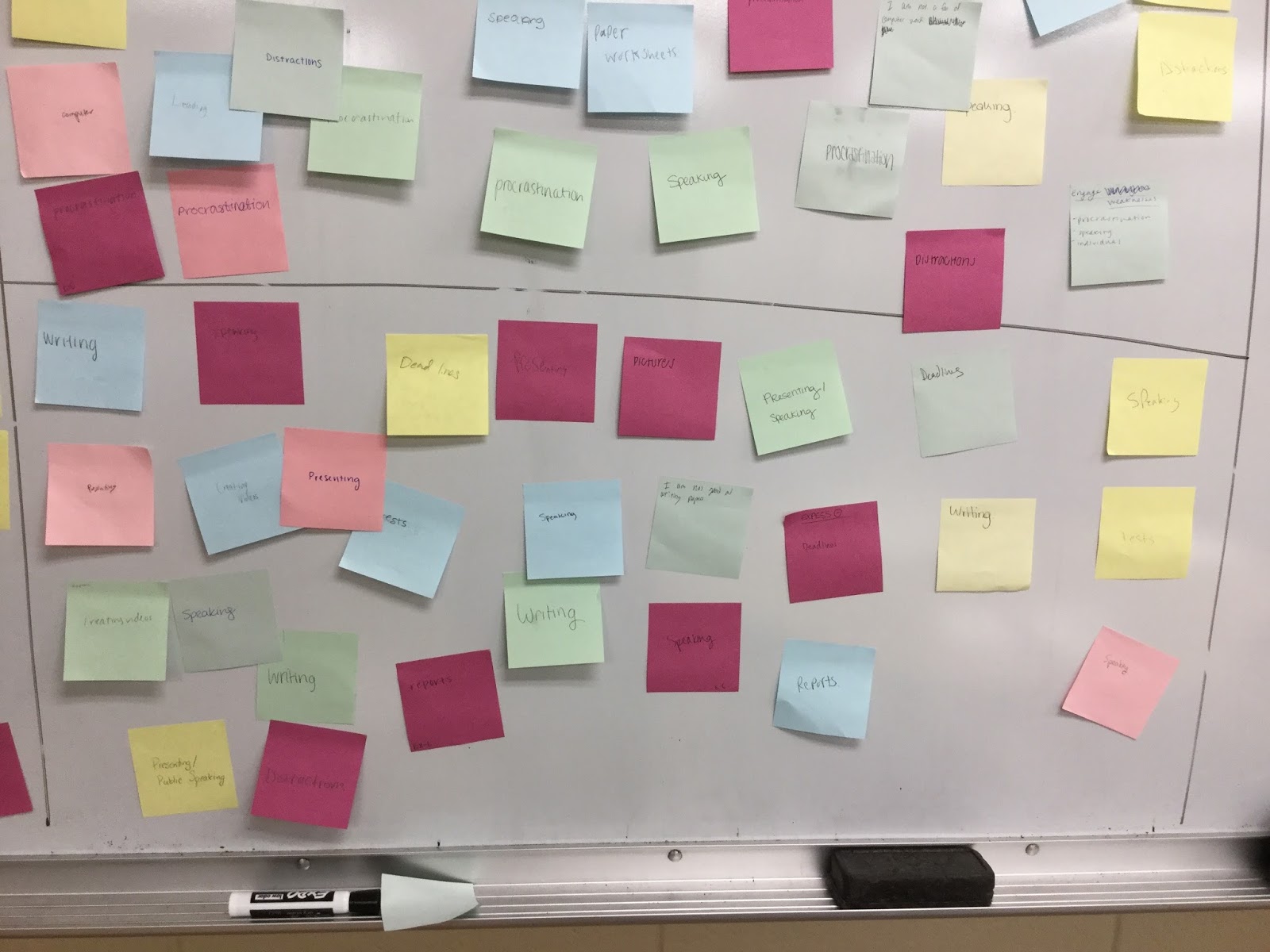 |
Now you can start finding ways to let students work through your curriculum maximizing their strengths and maybe finding a way to help them by addressing a challenge in a way that doesn't interfere with their understanding of content.
Comments
Post a Comment