In my previous school district, I was the only teacher teaching a physics course with set, district-wide learning outcomes. These same outcomes were also taught in physics classrooms at the other high school in our district. But at our school, I was one of the 2 physics teachers. The other teacher taught the AP-level physics courses. So, in many ways, I had opportunities to incorporate strategies I believed were best for learners and that I found worked best for them without being seen as out of alignment with anyone in our building. My amazing friend and one of my teaching philosophy goddesses, Katie Novak, stated the following misconception about alignment: All teachers must deliver instruction in the exact same way. True alignment, she says, is about shared goals, rigor, and outcomes. Thank you, Katie! Katie has taught me to truly believe that learner variability is the rule, not the exception. I encourage you to take 10 minutes to listen to Katie Novak explain it in the ...


I started the year with a grand plan for portfolios. But like most plans, it got changed dramatically. But, I do like that I am iterating the work we are doing in class to match a purpose. At the beginning of the year I had a plan to have a portfolio page per unit that would contain
- List of outcomes for the unit
- Reflections on formative quizzes
- Unit reflection with presentation of summative assessment

As we are moving towards adopting Next Generation Science Standards (NGSS), I’ve been using science practices as overarching outcomes in assessing student work. So, these same outcomes are addressed across multiple units. This along with a conversation with some people at state ASCD convention, led me to rethink the portfolio design.
The portfolio still has a home page, passion page (where they embed YouTube videos that represent their interests and aspirations), and “Me as a Learner” page (where the learner profile/preferences are housed). But, I’ve changed the unit pages into pages based on the 8 overarching science practices identified by NGSS (we've formally assessed 5 so far). All reflections will be housed on a separate page just for reflections. The hopes are that someday this will develop into a blog type component.

For each Science Practice page, student were required to give a brief introduction of explaining the science practice itself.
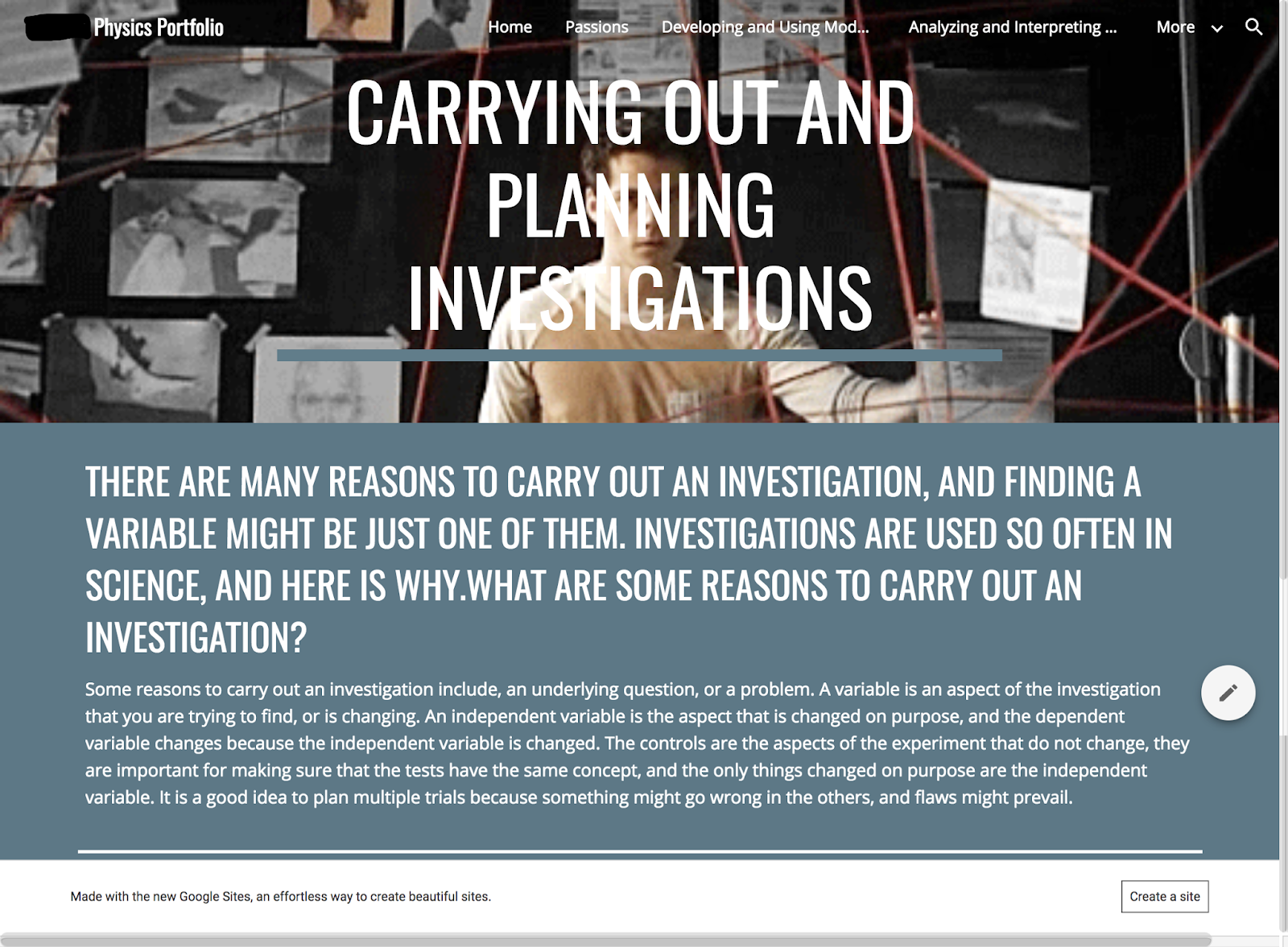
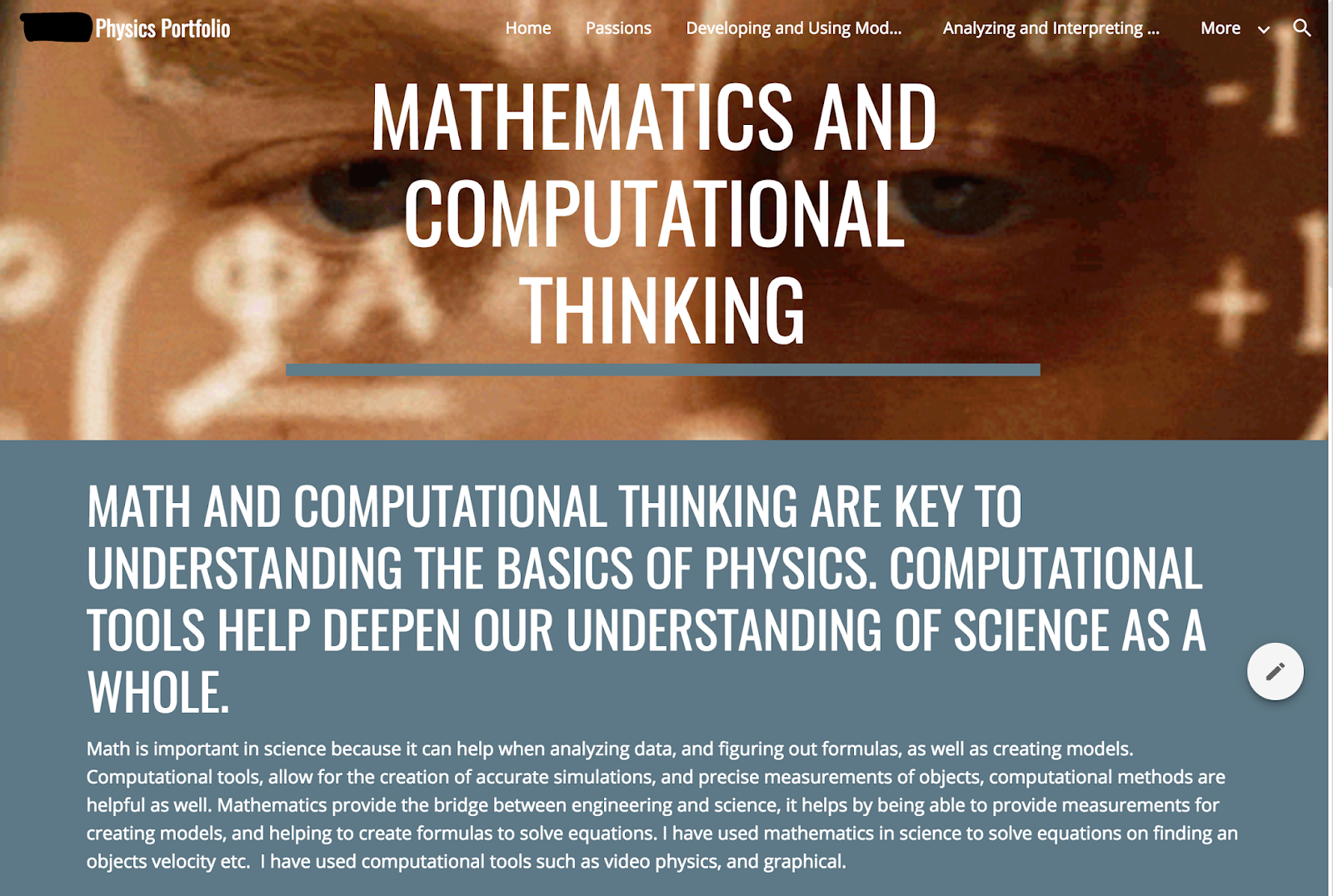
After the introduction, students are required to present two pieces of evidence from the term that demonstrate competency for this practice. It turns out that this was a great way to help us all see and understand what each practice was outside of being in the experience of the activity.
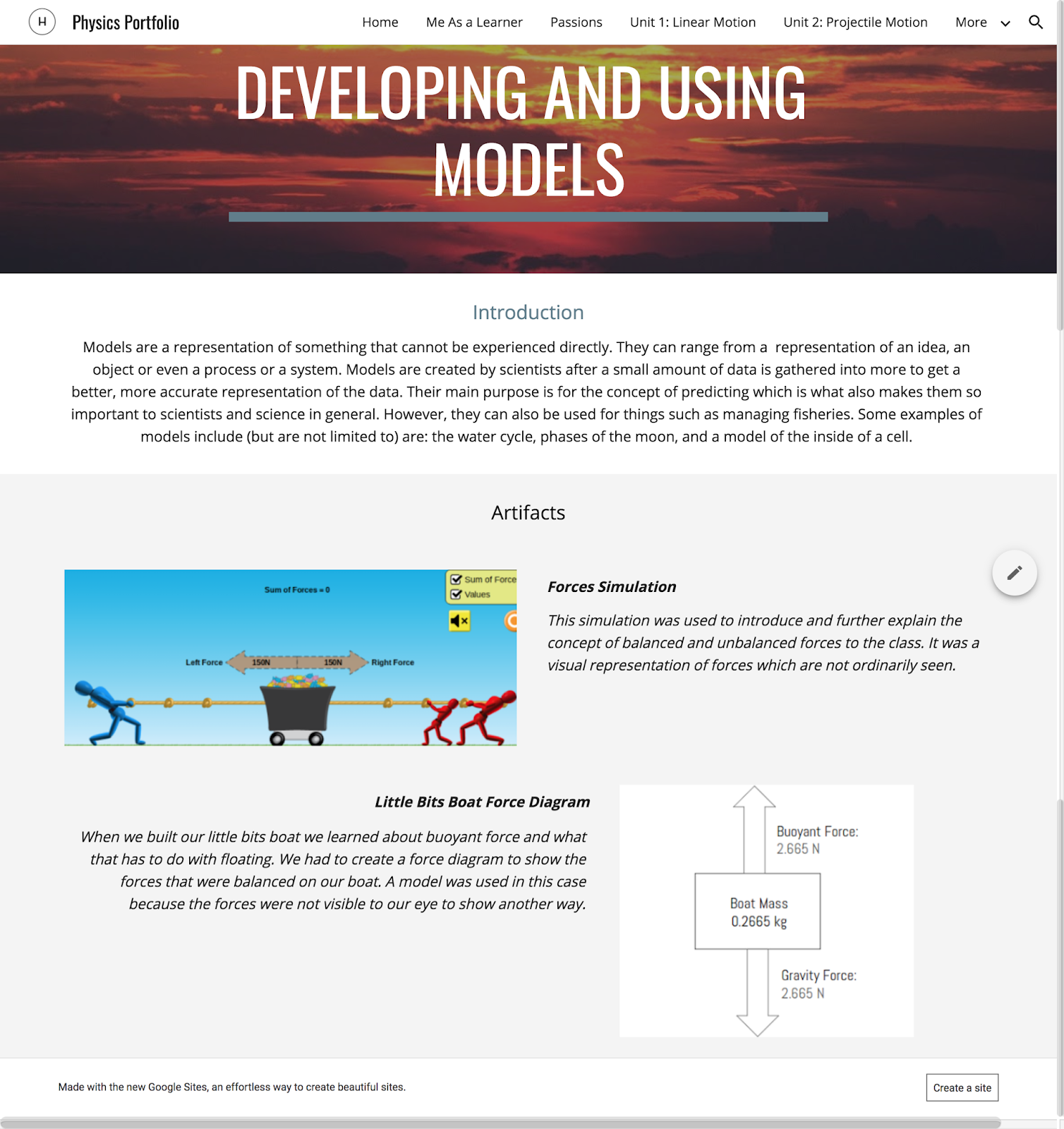

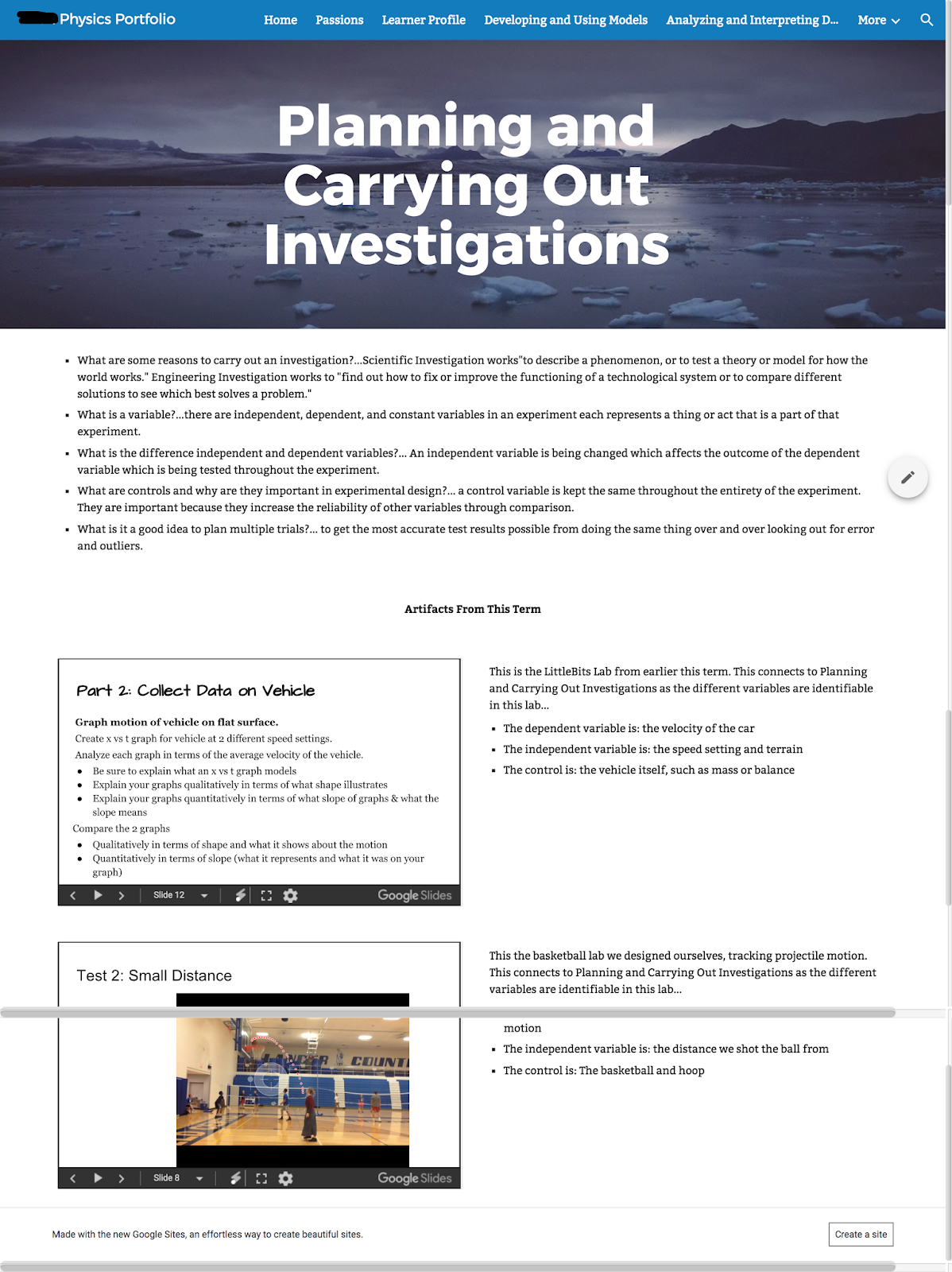

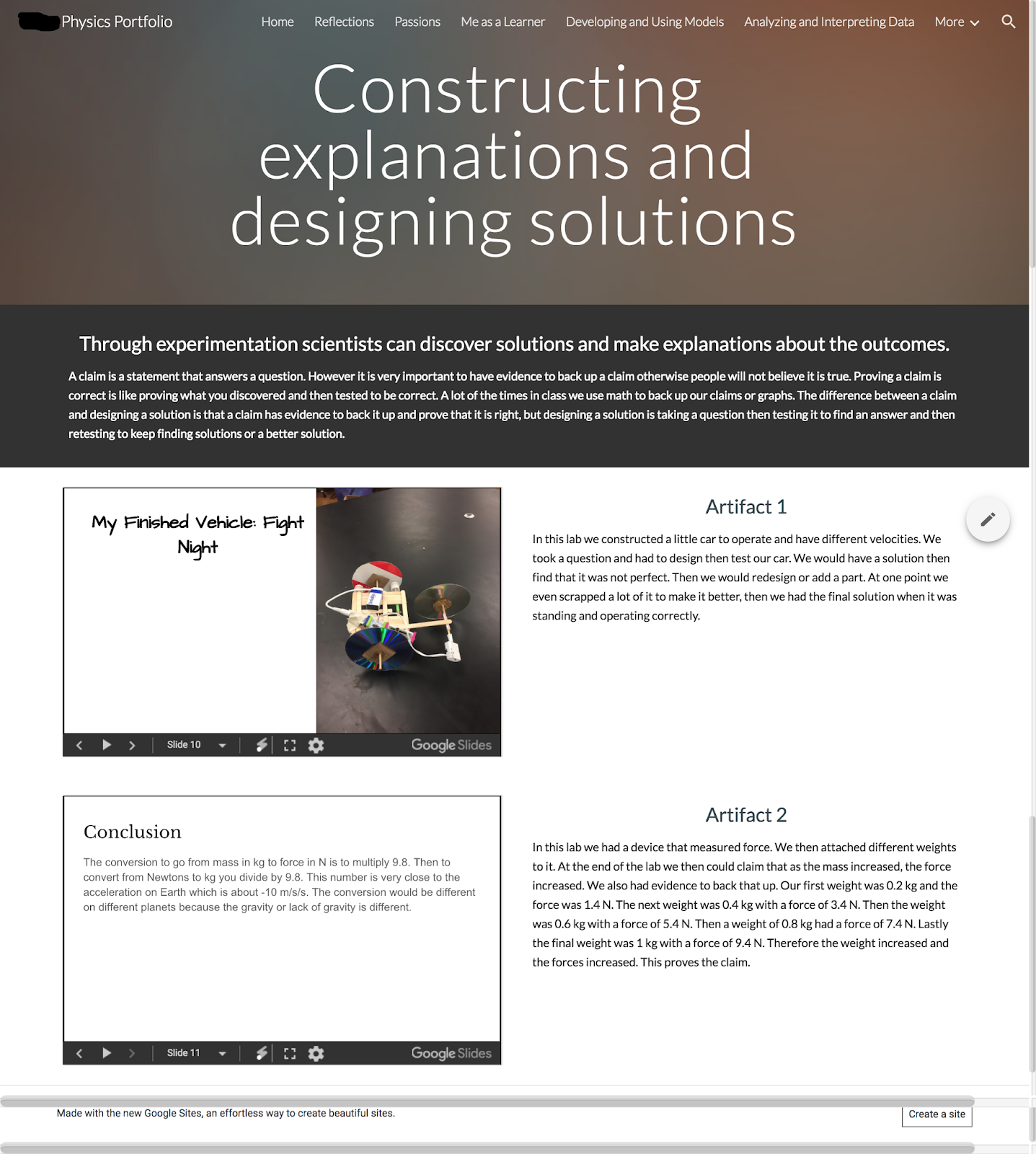
I really appreciate this idea of curation and choice of artifacts rather than me just mandating what should be in there. What I really enjoyed was discussing the relevancy of presenting artifacts as evidence of a competency and how that is a lifelong skill that will extend beyond any classroom into the workplace.
The ease of Google Sites has made this processes so much easier to embed evidence and provide a reflection. In addition, Alice Keeler’s WebCam Record Chrome Extension made it possible for those students who have difficulties typing to reflect using a webcam video saved to Google Drive. The students can embed those videos in their portfolio from Google Drive!

I look forward to having students continue to add evidence as they progress through these different practices.
Comments
Post a Comment