
Thank You for 20 "Mo" Years.

After 20 years of teaching at Brookfield Central, I am saying goodbye. Although I spent the majority of that time in the physics classroom alongside my learners. That changed for my last 18 weeks. I ended up in a place similar to where I started, teaching chemistry and biology. So, rather than dealing with juniors and seniors at the end of their high school careers, I was in classrooms with freshmen and sophomores still trying to find their place. At the same time, I was learning and teaching a set curriculum I hadn't taught in over a decade. So, we were learning. But, of course, I already knew the content.  The point of this post is to take a step back, reflect, and share the gratitude from the last students I had in my 20 years at Brookfield Central High School, as expressed through the cards and notes they made for me on my last day with them.  I don't take many "yay me" moments. But after 20 years, I'll soak this one in.

Canvas LMS Flipgrid Integration


I am really loving the Flipgrid app in Canvas. Why?
  • It allows students to access class grids right from Canvas without having to share out links or codes.
  • It allows me to create a Flipgrid response as a Canvas assignment.
  • Students can turn in assignments as a Flipgrid response.
  • With Speedgrader in Canvas, I can quickly see who has and hasn’t responded to a Flipgrid just like any other assignment submitted to Canvas.
So, I wanted to share out how to easily add it to your canvas course. If the GIFs are too small for you, I created a quick video below.

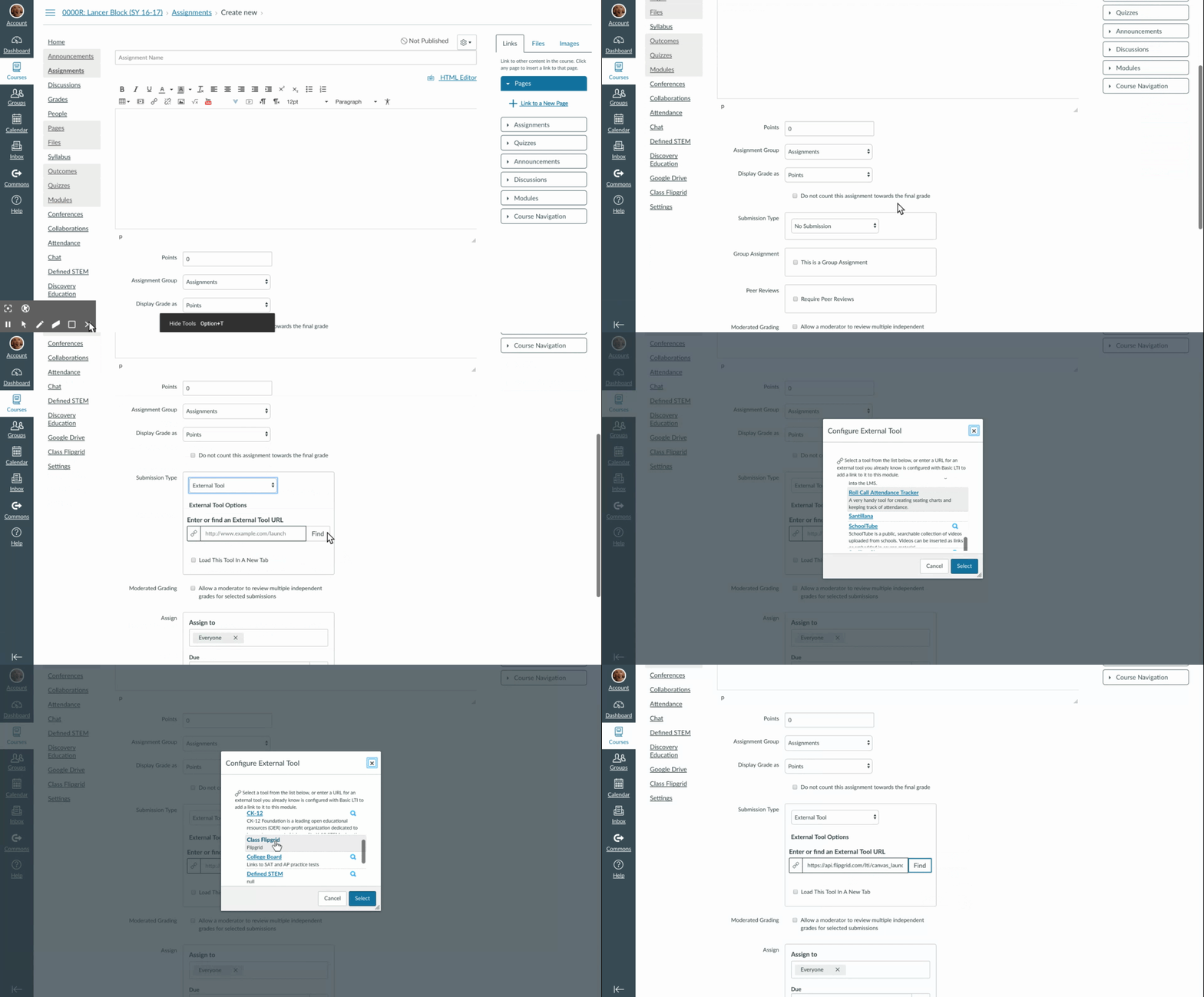
From Setting in Canvas, go to the Apps tab.


This sets up a specific Flipgrid for your course. The Flipgrid can then be accessed via the side navigation by you or students.
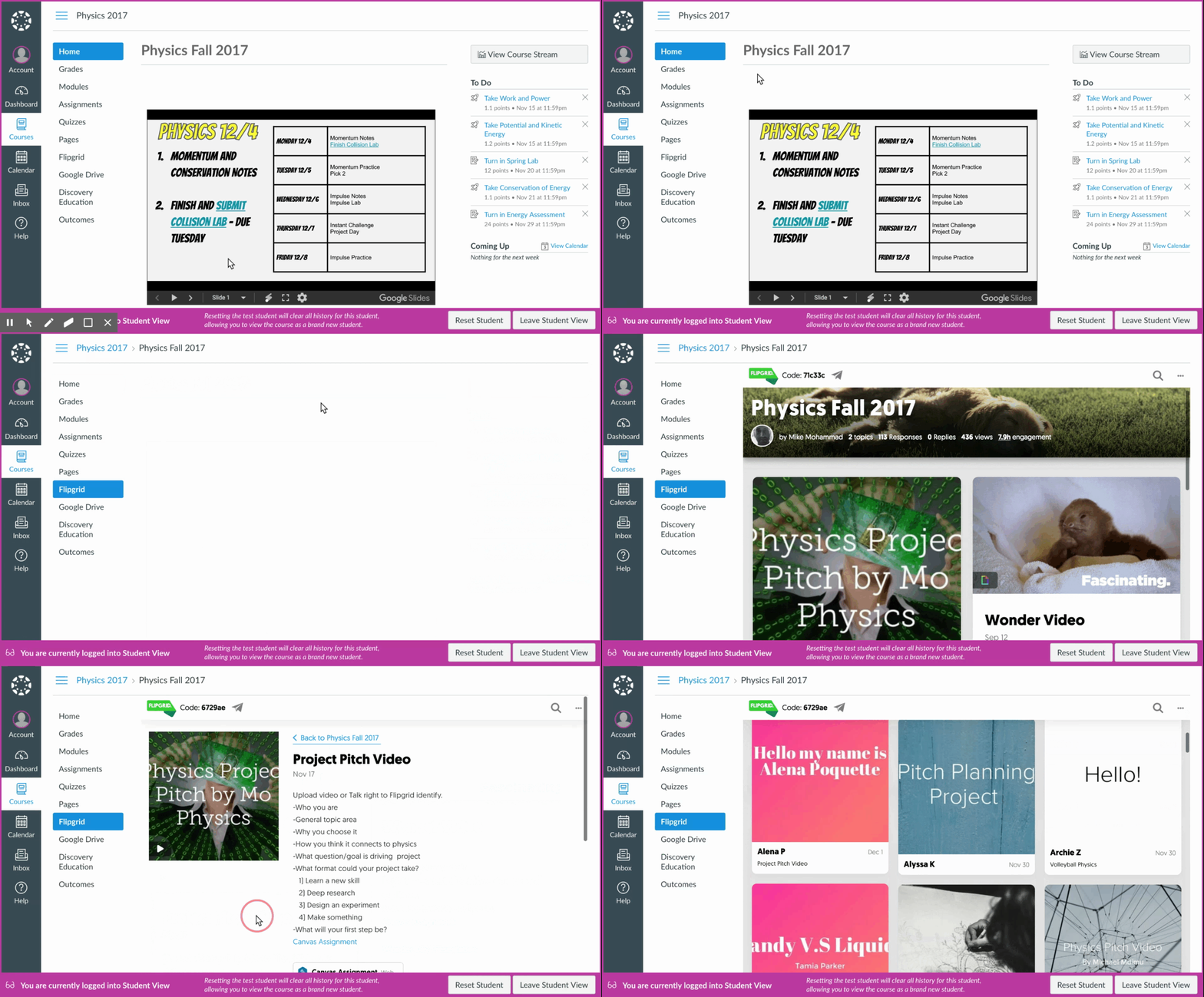
You can easily create assignment submissions to be Flipgrid responses during assignment creation.
Students can easily submit their assignment directly to Flipgrid from the assignment page.

Here’s the video compilation of the GIFs.


It’s a great integration and I can’t wait to play with it more.

Comments

Popular posts from this blog

Twitter Cards for Blogger

So, I’ve been seeing people with beautiful Twitter Cards in my Twitter Stream. They make it clear that there is a web page to visit and give a quick preview of what would be found. Something like the one below: I’ve been wondering how to get one of the cards to appear when I tweet out a link to my latest blog post.  Since I use Blogger, there is not a simple button to click to turn this on.  I had to find a way to paste new code into the HTML code of my blog.  It took some searching from multiple sites to get a completely functional.   This site though was quite helpful.  But, I’d like to walk you through my process and hopefully it helps a few out. There are a few types of Twitter Cards.  Two that at most frequently see are the basic summary card and the summary card with large image.  Below you can see the layout of each, but realize that they both have the same content pieces. This is going to look like a lot ...

Pear Deck, Quizlet, GimKit Appsmash

As a part of March Madness, my students did a EdTech Tournament bracket. The finals were between Gimkit and Pear Deck. Pear Deck won, but my students love both tools.  So when someone asked me if I ever thought of an appsmash between the two, I had to try something out. This is a triple app smash that links Pear Deck to Gimkit using Quizlet. The appsmash uses student generated explanations, definitions, and visuals to create a GimKit. If you are not familiar with Pear Deck Vocabulary it allows students collaborate in the creation of flashcards from a list of predetermined terms or concepts. These flashcards are have both a written and visual component. For all the details on Pear Deck Vocabulary, I’d recommend heading over to Getting Started with Flashcard Factory. If you are not familiar with Gimkit . It is a formative quiz game that allows students to work at questions at their own pace while competing against their classmates. In addition, participants can go to an in ...

Personalized Learning Tasks and Roles

Yesterday, I read a great post by Jim Rickabaugh dealing with the roles of learner and teacher in a personalized learning environment by looking at tasks . The roles were set up on a continuum. This article timed perfectly with a reflection on part of Students at the Center by Allison Zmuda and Bena Kallick on idea generation and task development I had in mind. These two works are the focus of my reflection here. I think a key misunderstand teachers have when it comes to digging into personalizing learning is that for planning purposes, we no longer begin with standards but with student desires.  I believe like all good instruction, we need to start with the standards.  Think about it, standards are what we want all learners to know and be able to do as a result of passing through our educational system. That is why it is essential that we make sure that standards are representative of what we believe is important for learners to be informed and productive in th...